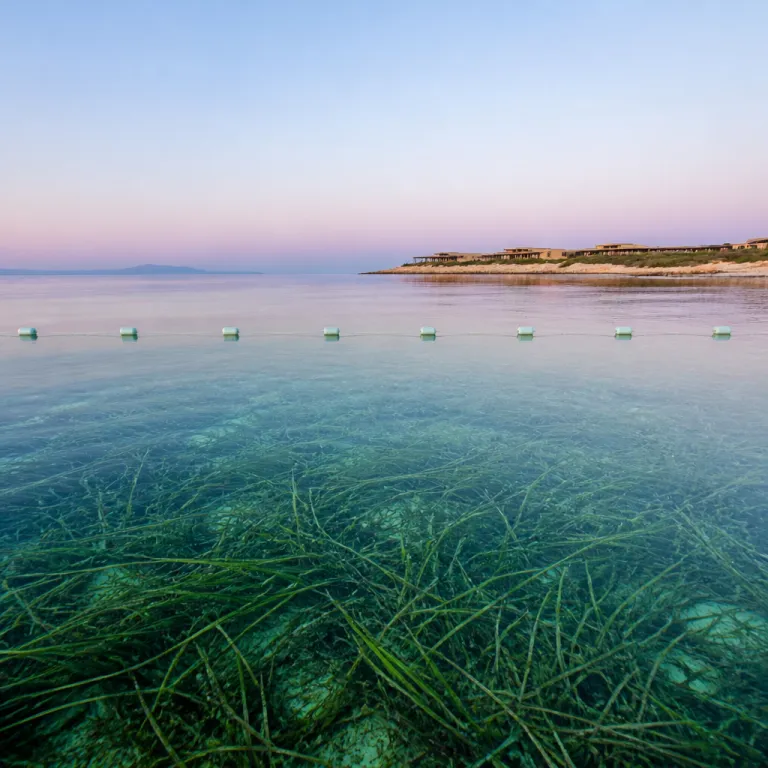
Posidonia Sardinia beaches and the new language of luxury
On the posidonia Sardinia beaches around Cagliari, the first thing many travelers notice is not the turquoise sea but the brown banks of dried seagrass at the high tide line. Those tangled leaves look like neglect to an untrained eye, yet every serious marine biologist in the Mediterranean will tell you they are a sign of exceptional water quality. Luxury hoteliers along this coastal stretch are finally learning that the presence of Posidonia oceanica is not a problem to hide but a story to tell with pride.
Posidonia is not an algae but a higher plant, an endemic marine species that evolved to live fully submerged in the Mediterranean Sea and form extensive underwater meadows. These underwater meadows around Sardinia’s southern beaches, from Poetto to Mari Pintau and Villasimius, create a dense marine ecosystem where more than four hundred marine species shelter, feed and reproduce. When you book a premium room with a sea view in Cagliari, you are also buying into this quiet underwater project that stretches from the shore to several meter long blades of seagrass swaying in the marine currents.
On posidonia Sardinia beaches, the dried leaves that accumulate in certain areas are simply fragments carried by currents from offshore meadows. The process in which the plant sheds and renews its leaves is part of a natural cycle, a process plant scientists compare to a forest dropping needles, and those banks help protect the beach from erosion during winter storms. In Europe, and especially in Mediterranean countries, this coastal protection function is now recognized as a good practice example of how an endemic marine plant can buffer climate change impacts while still supporting high end tourism.
For travelers choosing between different beaches in Sardinia, the will to find a perfectly bare stretch of sand can clash with the will place of local conservation rules. Municipalities once raked every beach clean for aesthetics, but Cagliari and nearby coastal towns now leave many Posidonia banks in place outside peak bathing areas. The result is a more layered landscape where luxury resorts frame the sea with cabanas and chilled Vermentino, while just a few meters away the oceanica debris quietly locks away carbon dioxide and stabilizes the shoreline.
From apology to asset: how Cagliari’s luxury hotels talk about seagrass
For years, front desk teams in Sardinia’s premium coastal properties treated Posidonia as something to apologise for. Guests would arrive expecting Caribbean style beaches, see the brown banks and ask whether the sea was dirty, and staff would promise that cleaning crews would remove the plant material overnight. That narrative is changing fast as the European Union, local authorities and the MEDSEA Foundation push a different message about posidonia Sardinia beaches and their role in the wider marine ecosystem.
Today, the most forward thinking luxury resorts in Sardinia brief their concierges to explain that Posidonia oceanica meadows produce more oxygen per square meter than many tropical forests. They highlight that this higher plant is one of the Mediterranean’s most efficient carbon dioxide sinks, and that its extensive underwater root systems help anchor sand in place along vulnerable coastal areas. Some properties even integrate short talks with marine guides into their guest experience, turning what was once a complaint into a point of pride for both the hotel and the surrounding beaches.
Language on hotel websites is shifting as well, especially for properties marketing themselves around Cagliari’s gulf and Poetto beach. Instead of promising perfectly raked sand, they now frame the presence Posidonia as proof of clean, well oxygenated sea water and a thriving endemic marine community. When you read about “natural beach lines” or “seasonal seagrass banks” in a room description, you are seeing the hospitality version of a conservation project that runs in parallel with European marine policy.
For solo travelers who care about sustainable travel, this transparency is a useful filter when choosing where to stay. A property that explains why boat anchoring is restricted in certain area offshore, or why some beach sections keep their Posidonia leaves, is usually one that takes environmental good practice seriously. If you want a deeper sense of how each neighbourhood balances nightlife, access to the sea and environmental rules, use this detailed guide to choosing your Cagliari hotel by neighbourhood character before you commit to a booking.
Anchoring, fines and the quiet power of EU protection
Behind the serene surface of posidonia Sardinia beaches lies a dense web of regulations shaped by European and local conservation efforts. The European Union’s Habitats Directive lists Posidonia oceanica meadows as a priority habitat, which means that disturbing them through careless boat anchoring or dredging can trigger serious penalties. In the Gulf of Cagliari, where luxury yachts share the same marine areas as local fishing boats, this legal framework is no longer abstract policy but a daily operational reality.
Anchoring restrictions now define where captains may drop anchor and where they must use mooring buoys to protect Posidonia. Monitoring programs linked to the LIFE RES MARIS project have shown that thousands of boats used to anchor directly on underwater meadows each season, scarring the seabed and tearing up meter long shoots of the plant. Resorts that offer private boat transfers or yacht charters increasingly brief guests about these rules, explaining that good practice at sea is as much a part of luxury as the chilled Franciacorta waiting back at the beach bar.
On land, Sardinia’s well publicised sand theft fines, which can reach several thousand euros, sit within the same cultural shift that seeks to protect posidonia Sardinia beaches and their fragile coastal systems. Removing dried Posidonia leaves from protected beaches or disturbing banks in sensitive areas can also lead to sanctions, because those banks are considered part of the natural coastal defence. This is not a symbolic gesture ; it is a recognition that the process plant dynamics of Posidonia, from leaf fall to decomposition, underpin the stability of the entire shoreline.
For travelers booking high end stays in Cagliari, these rules shape how you will experience both the sea and the city. You may find that your hotel’s preferred skipper refuses to anchor in a certain area, or that a favourite beach cove has a roped off zone above the underwater meadows where swimming is encouraged but anchoring is not. To understand how these environmental shifts intersect with the city’s broader tourism evolution, read the analysis of how upcoming summers are reshaping Cagliari’s waterfront and hospitality scene before planning your dates.
Where to stay in Cagliari for seagrass, snorkelling and serious comfort
Choosing a luxury base in Cagliari as a solo explorer means balancing access to posidonia Sardinia beaches with the pleasures of the city. Stay in the historic Castello or Marina districts and you will wake to church bells and espresso bars, then reach Poetto beach in fifteen minutes by taxi for a swim above underwater meadows. Base yourself closer to the coastal strip and the sea becomes your morning ritual, with the city’s markets and galleries as an afternoon counterpoint.
Properties along Poetto and the nearby coastal areas often promote direct access to the beach and views over the Gulf of Angels, where extensive underwater Posidonia meadows stretch out just beyond the shallows. From these terraces you can watch marine currents shift the colour of the sea during the day, knowing that below the surface the higher plant blades sway in slow motion and quietly filter carbon dioxide from the water. Many of these hotels now work with environmental NGOs and the MEDSEA Foundation to align their operations with conservation goals, from limiting boat anchoring near sensitive area to supporting marine ecosystem monitoring.
In the city centre, luxury hotels without immediate beach frontage still play a role in the broader project to protect Posidonia. They curate excursions with skippers who respect anchoring regulations, recommend diving schools that avoid trampling meadows, and steer guests toward beaches in Sardinia where the presence Posidonia is visible yet well managed. When you read their sustainability pages, look for specific references to Posidonia oceanica, marine protected areas and partnerships with European or local conservation initiatives rather than vague green language.
One practical tip for hotel selection in Cagliari is to think in terms of how you will place your time between sea and city. If your will is to swim every morning above endemic marine habitats and spend afternoons in galleries, choose a property with efficient transfers to Poetto and the surrounding beaches. If you prefer to focus on urban life and treat the sea as an occasional escape, a central address with curated day trips to the most intact Posidonia meadows may suit you better than a purely coastal resort.
Swimming above underwater meadows: what informed travelers actually see
Slip into the sea off Poetto or Cala Regina and you will feel the difference between bare sand and Posidonia meadows under your fins. Over the pale sandy patches the water looks almost transparent, but as you glide above the darker areas you are crossing extensive underwater fields of Posidonia oceanica, with meter long blades rising from the seabed. Small fish weave through the leaves, sea bream patrol the edges and, if you are lucky, an octopus peers out from a rocky shelter at the boundary between plant and sand.
These meadows are not static ; they are shaped by marine currents that carry seeds, fragments and nutrients along the coast, allowing the plant to grow meter by meter over decades. In some coves near Cagliari, guides will point out how the process plant dynamics have built natural terraces of dead rhizomes, forming underwater steps that soften wave energy before it reaches the beach. For snorkellers and divers, this means that the most interesting marine ecosystem often lies just beyond the first drop off, where the seagrass becomes denser and the mix of species more complex.
Luxury resorts that understand this reality are starting to design guest experiences around it rather than against it. Instead of promising only sandy entry points, they map out the best areas where the presence Posidonia creates rich marine life, then provide clear guidance on how to swim above the meadows without trampling the higher plant. Some even offer guided snorkel sessions with marine biologists who explain on site why “Why is Posidonia oceanica important? It provides habitat, protects coasts, and sequesters carbon.”
For solo travelers, this kind of framing changes how a day at the beach feels. You are no longer just occupying a lounger but participating in a living European coastal story, one that links Sardinia to other Mediterranean countries through shared efforts to protect Posidonia. When you float above those leaves, you are hovering over a quiet European Union success, where policy, science and hospitality have converged to keep a fragile marine world intact.
How your booking choices help protect Posidonia in Sardinia
Every reservation on posidonia Sardinia beaches is a small vote for one version of the Mediterranean or another. Choose a hotel that still rakes every beach section bare and ignores anchoring rules, and you reinforce an outdated model that treats the sea as a backdrop rather than a living marine ecosystem. Opt for a property that talks openly about Posidonia oceanica, underwater meadows and conservation partners, and you support a different vision where luxury and environmental responsibility share the same coastal areas.
When evaluating hotels in Cagliari, look beyond generic sustainability badges and search for concrete references to Posidonia and marine protection. Does the property explain how it manages boat anchoring for guest excursions, or how it coordinates with marine protected areas to avoid damaging meadows in sensitive area ? Does it mention collaborations with the MEDSEA Foundation, local authorities or European projects that aim to protect Posidonia from climate change, pollution and physical damage ? These details signal whether conservation is a marketing line or a real operational priority.
Your behaviour on the beach matters as much as your booking. Respect any roped off zones above underwater meadows, avoid dragging sunbeds or kayaks across dried Posidonia leaves and never attempt to remove banks from the shore, even if they look messy in certain places. If you rent a boat, insist that the skipper follows good practice by using designated moorings instead of dropping anchor on seagrass, and remember that in many Mediterranean countries, including Italy, damaging Posidonia can carry legal consequences.
Finally, treat your time in Cagliari as part of a longer European story about how we will place value on intact marine ecosystems in the age of climate change. The choices you make about where to stay, how to move along the coast and how to talk about the sea with friends back home all feed into a wider cultural shift. For a deeper sense of how locals relate to their waterfront beyond the obvious postcard views, read this insider guide to Cagliari’s lesser known waterfront experiences and let it shape how you approach the city’s beaches.
FAQ
Is Posidonia on Sardinian beaches a sign of pollution or clean water ?
The presence of Posidonia on Sardinian beaches is a strong indicator of clean, healthy sea water rather than pollution. Posidonia oceanica only thrives in clear, well oxygenated marine areas with low levels of contamination. When its leaves wash ashore and form banks, they show that extensive underwater meadows are functioning offshore and supporting a rich marine ecosystem.
Why do some Sardinian beaches leave Posidonia banks in place instead of cleaning them ?
Many municipalities and resorts now leave Posidonia banks in place because they protect the beach from erosion and storm damage. The dried leaves act as a natural barrier that absorbs wave energy and helps retain sand along vulnerable coastal stretches. Removing them entirely can accelerate shoreline loss and undermine the long term stability of posidonia Sardinia beaches.
How do luxury resorts in Sardinia help protect Posidonia meadows ?
Luxury resorts support Posidonia protection by enforcing responsible boat anchoring, partnering with marine protected areas and educating guests about seagrass ecology. Some properties work with organisations such as the MEDSEA Foundation to monitor underwater meadows and adapt their operations to minimise impact. They may also adjust beach cleaning practices, leaving Posidonia banks in less used areas while maintaining access for swimmers.
Can I swim and snorkel safely above Posidonia meadows near Cagliari ?
Swimming and snorkelling above Posidonia meadows near Cagliari is both safe and rewarding when done carefully. You should avoid standing on or kicking through the seagrass, because trampling can damage the higher plant and its root systems. Floating above the meadows and using gentle fin movements lets you enjoy the marine life while keeping the habitat intact.
Are there legal penalties for damaging Posidonia in Sardinia ?
Italian regulations, influenced by European Union habitat protection rules, allow for fines when Posidonia meadows are damaged. Illegal boat anchoring on seagrass, dredging or removing large quantities of dried Posidonia from protected beaches can all trigger sanctions. These penalties are designed to deter harmful behaviour and support long term conservation of Posidonia oceanica along Sardinia’s coasts.
Trustful expert sources for further reading : European Environment Agency ; MEDSEA Foundation ; LIFE RES MARIS project documentation.