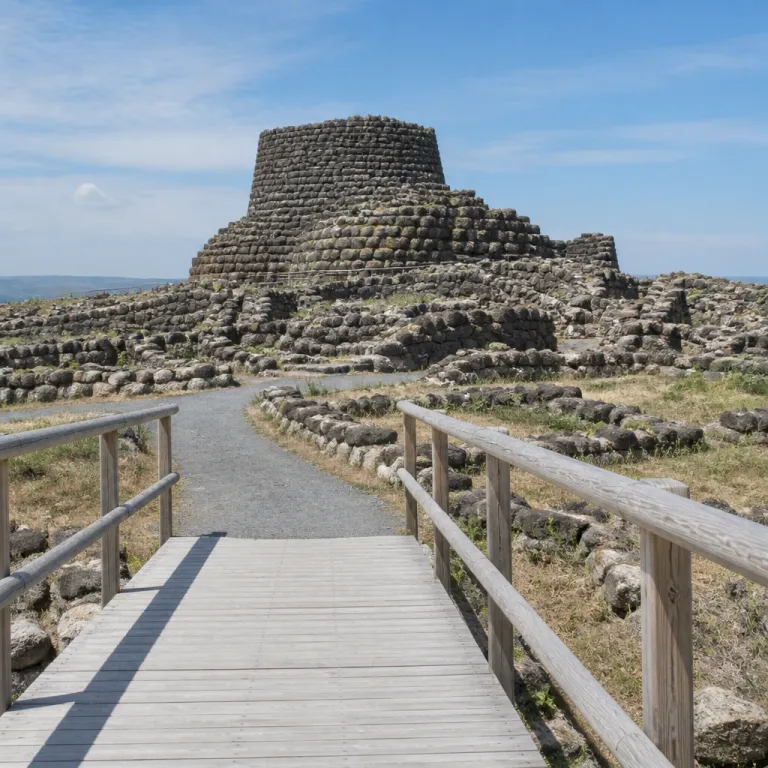
Why barumini su nuraxi sardinia belongs on a Cagliari luxury itinerary
From a suite overlooking Cagliari’s marina, the UNESCO-listed Su Nuraxi at Barumini feels distant on the map yet strangely close in spirit. In just ninety minutes by private transfer you move from aperitivo glasses clinking in Villanova to the wind brushing basalt stones at the most important nuragic heritage site on the island. That contrast between polished city hotels and the raw nuragic complex at Su Nuraxi is exactly what makes a stay in Sardinia’s capital so compelling.
Su Nuraxi is a Bronze Age nuraghe fortress located near the quiet village of Barumini, in the agricultural heart of southern Sardinia. The archaeological site sits on a low rise above fields and almond trees, its central tower rising about 18.6 meters, a vertical statement from a nuragic civilization that left no written records yet scattered more than seven thousand nuraghe towers across the island. According to UNESCO’s World Heritage listing, the site was inscribed in 1997 as the most complete example of this architecture. When you visit this UNESCO World Heritage site from Cagliari, you are not ticking off another monument in Italy; you are stepping into a world that predates Rome, Carthage and the medieval walls of Castello.
For couples staying in premium hotels in Cagliari, Su Nuraxi offers one of the best day trips for balancing indulgence with meaning. Morning can start with room service espresso and sea views, followed by a small group tour at the nuragic complex, then a late lunch back on the waterfront. The inland Barumini landscape, with its rolling fields and distant Giara Park plateau, adds a different texture to a trip otherwise defined by Poetto Beach and the old town’s narrow streets.
From Cagliari’s luxury hotels to a nuragic fortress in the fields
Most luxury travelers base themselves in Cagliari, then treat Su Nuraxi di Barumini as a curated inland excursion. The drive from the city’s premium hotels to the archaeological site takes around ninety minutes, passing vineyards, wheat fields and the occasional nuraghe silhouette on distant hills. Arrange a private driver through your concierge or join one of the better small group guided tours that pair Su Nuraxi with a tasting stop or a Giara Park detour.
Leaving Cagliari after breakfast, you trade the polished marble lobbies of seafront properties for the basalt blocks of the nuragic complex by late morning. The Su Nuraxi fortress is located just outside Barumini village, with a discreet visitor center where all guided tours begin and where no independent wandering is allowed inside the central tower or the surrounding huts. This controlled access protects the archaeological site while ensuring that every visit is structured, timed and interpreted by an official guide who understands both the nuragic people and the expectations of international guests.
Couples who enjoy Cagliari’s more authentic quarters, such as an evening in Stampace after dark with its honest trattorie and low key wine bars, tend to appreciate the unvarnished character of the Barumini nuraghe as well. You can read more about that neighbourhood’s mood in this Stampace after dark guide, then use it as a counterpoint to plan your inland heritage tours. The shift from city stone to Bronze Age stone, from aperitivo chatter to the silence around Casa Zapata and the Su Nuraxi ruins, gives your Sardinia stay a narrative arc rather than a simple checklist.
Inside Su Nuraxi: how guided tours decode a nuragic complex
Every visit to Su Nuraxi Barumini is by guided tour only, a policy that suits thoughtful travelers who prefer context over aimless wandering. Tours usually last fifty to sixty minutes and depart roughly every half hour, with options for both small group experiences and private guides arranged in advance. English speaking guides walk you through the archaeological site in a clear sequence, from the outer village to the heart of the nuragic complex.
You begin among the circular stone huts of the village, where the nuragic people lived, stored grain and held social gatherings across several century BCE phases. From there, paths lead toward the defensive walls and the four corner towers that were added to the original central tower in a later century, creating the Barumini nuraghe profile that defines the site today. Climbing carefully inside the corbel vaulted chambers of the central keep, you feel the temperature drop and understand why this heritage site was both fortress and community center during the Bronze Age.
Guides explain that Su Nuraxi was constructed using dry stone techniques with basalt blocks, then gradually expanded as local clans consolidated power across this part of Sardinia. They also place the site within a wider network of heritage sites, encouraging guests to connect Su Nuraxi with the coastal ruins at Nora, which you can explore through this detailed Nora archaeological guide. Hearing how the nuragic civilization interacted with later Phoenician and Roman arrivals in Italy helps you see each archaeological site not as an isolated monument but as a chapter in a longer Mediterranean story.
Casa Zapata, Giara Park and the wider Barumini heritage landscape
Su Nuraxi is only the beginning of what the Barumini heritage area can offer to travelers who care about culture and landscape. A short walk from the main archaeological site, Casa Zapata blends aristocratic architecture with archaeology, housing a museum literally built above another nuraghe that was uncovered beneath the former residence of the Zapata family. Glass walkways allow you to look down into this second archaeological site while exhibitions explain how the nuragic civilization shaped central Sardinia.
Many couples pair their visit to the Barumini nuraghe complex with an afternoon in Giara Park, a basalt plateau located about fifteen minutes away by car. The park is known for its wild horses, seasonal pools and expansive views across the countryside, offering a softer counterpoint to the dense stone of the nuragic complex at Su Nuraxi. This combination of archaeological tours and light hiking works especially well in late spring or early summer, when temperatures are warm but not oppressive and the plateau still holds water.
Back in Barumini village, the local museum complements what you have seen at the main Su Nuraxi fortress and at Casa Zapata. Exhibits trace the Bronze Age layers of occupation, highlight finds from the central tower and explain how the nuragic people adapted over each century BCE until the settlement was eventually abandoned. For guests staying in Cagliari’s higher end hotels, arranging a full day private tour that includes Su Nuraxi, Casa Zapata and Giara Park ensures a seamless experience with minimal waiting and maximum insight.
Planning your Su Nuraxi day from a Cagliari luxury base
Thoughtful planning turns a visit to Su Nuraxi di Barumini into the intellectual highlight of a Cagliari stay. Start by choosing a hotel that understands heritage travel, ideally one where the concierge can arrange guided tours with reliable drivers and English speaking guides familiar with nuragic history. Many premium properties now work with specialist operators who focus on small group cultural tours rather than generic sightseeing.
From Cagliari, aim to reach the archaeological site by mid morning, when light still slants across the basalt and temperatures are manageable. The heritage site is open year round; as a guideline, typical hours run roughly from 9:00 to late afternoon, with slightly longer days in peak season and reduced schedules on some holidays, so always confirm current times through your hotel or the official Barumini system website. Ticket prices are modest compared with many Italian attractions, with combined passes available that include Casa Zapata and the local museum, and payment by card is generally accepted at the visitor center.
To deepen your understanding, pair the Su Nuraxi experience with time at the National Archaeological Museum in Cagliari, where artifacts from nuragic sites across Sardinia are displayed alongside pieces from Nora and other coastal settlements. For couples who enjoy agriturismo style stays, consider adding a night inland at a refined country estate, then returning to the city for a more urban finale, perhaps inspired by this Tuscan estate style experience for Cagliari travelers. That mix of rural calm, coastal comfort and deep time at a UNESCO World Heritage site is what elevates a Sardinia trip from pleasant to unforgettable.
How Su Nuraxi reframes Sardinia’s story for luxury travelers
Spending a day at Su Nuraxi Barumini quietly shifts how you read the island once you return to your Cagliari hotel. The nuragic complex at Su Nuraxi reminds you that Sardinia is not just about beaches and seafood but about a Bronze Age society that engineered massive stone towers without leaving written chronicles. When you sip Vermentino on a rooftop terrace that evening, the silhouette of every distant nuraghe you passed on the drive back feels newly charged with meaning.
Su Nuraxi’s status as a UNESCO World Heritage site rests on its completeness, with the central tower, four corner towers, defensive walls and surrounding village all preserved in a way rarely matched by other heritage sites in Italy. The excavation led by archaeologist Giovanni Lilliu in the mid twentieth century, particularly from the late 1940s onward, revealed a stratified history stretching from the seventeenth century BCE to the eventual abandonment of the settlement several centuries later. As official documentation succinctly puts it, “What is Su Nuraxi? A Bronze Age nuraghe complex in Sardinia. Who built Su Nuraxi? The Nuragic civilization. When was Su Nuraxi constructed? 17th century BCE. Is Su Nuraxi a UNESCO site? Yes, since 1997. Can I visit Su Nuraxi? Yes, guided tours are available.”
For couples who value narrative as much as comfort, this single archaeological site can become the anchor around which a whole Cagliari itinerary turns. You might start with Nora on the coast, move inland to Barumini in Sardinia for Su Nuraxi and Casa Zapata, then finish among the galleries and restaurants of the capital, letting each place comment on the others. In that sequence, the nuragic people are no longer an abstract term in a guidebook but the first hosts of the island, shaping a landscape that your chosen hotel now interprets in its own contemporary language of stone, light and hospitality.
FAQ
What is Su Nuraxi and why is it important ?
Su Nuraxi is a Bronze Age nuraghe fortress located near Barumini, in central southern Sardinia. It is considered the most complete nuragic complex on the island, with a central tower, four corner towers, defensive walls and a surrounding village of stone huts. Its status as a UNESCO World Heritage site makes it a key destination for understanding the nuragic civilization that predated classical Italy.
How do I visit Su Nuraxi from Cagliari ?
From Cagliari, Su Nuraxi is about ninety minutes away by car, making it an easy day trip from luxury and premium hotels in the city. You can book a private driver through your hotel concierge or join a small group tour that includes transport, entrance fees and guided tours of the archaeological site. All visits inside the main complex are by official guided tour only, with departures roughly every thirty minutes from the visitor center near Barumini village.
What will I see during a guided tour of Su Nuraxi ?
A standard guided tour takes you through the outer village, where the nuragic people lived, then into the fortified core of the Barumini nuraghe. You will see the massive basalt blocks of the central tower, climb through corbel vaulted chambers and walk along the defensive walls that link the four corner towers. Guides explain the Bronze Age construction techniques, the social role of the site and its place among other heritage sites in Sardinia.
Can Su Nuraxi be combined with other attractions in the area ?
Yes, many visitors combine Su Nuraxi with Casa Zapata in Barumini, where a museum is built above another nuraghe, and with Giara Park, a nearby basalt plateau known for its wild horses and views. This creates a full day itinerary that balances archaeological exploration with light walking in nature. Travelers based in Cagliari often add a visit to the National Archaeological Museum on another day to see artifacts from Su Nuraxi and other nuragic sites.
Is Su Nuraxi suitable for all travelers ?
The exterior areas of the archaeological site are relatively accessible, but the interior of the central tower involves steep, narrow stone stairways that may challenge guests with mobility issues or claustrophobia. No pets are allowed on the site, and sturdy footwear is recommended due to uneven surfaces. Luxury travelers can request private or small group tours tailored to their pace and interests, ensuring a comfortable yet insightful experience.