A half day from Cagliari: why Nora belongs on your itinerary
From a luxury base in Cagliari, the nora archaeological site sardinia offers the most rewarding half day escape. Within an hour you move from the city’s marina and Castello’s limestone walls to an ancient city where the sea is slowly reclaiming streets, mosaics, and a roman theater. Couples who value comfort and context will find that this single archaeological site condenses three millennia of history into a coastal walk that still feels intimate.
The drive along the cagliari pula road traces the southern curve of city sardinia, passing lagoons where flamingos feed and the first dunes appear. As you approach the town of Pula, the landscape opens toward Capo Pula, and you will find the nora ancient shoreline framed by low Mediterranean scrub and the small church Sant Efisio that anchors local devotion. Here the nora archaeological site sardinia sits on a narrow peninsula, an archaeological park where the ancient city of Nora once controlled maritime trade between the Italian mainland, North Africa, and Iberia.
For travelers used to polished lobbies and concierge desks, Nora’s appeal lies in contrast. The archeological site is modest in scale, roughly ten hectares excavated, yet the layers of phoenician, punic, and roman history feel unusually legible as you walk. You step from a roman forum to punic houses and then toward the sea edge, where the site nora literally sinks into the water, reminding visitors that this city nora is both a museum in the open air and a warning about time and tide.
Reading the layers: Phoenician, Punic, and Roman Nora
On arrival at the archaeological park, a guided tour is the most efficient way to understand how the ancient city evolved. The official narrative is clear about the sequence of powers that shaped Nora ; “Nora is considered the oldest city in Sardinia, showcasing Phoenician, Carthaginian, and Roman heritage.” A good guide will walk you through this phoenician punic and roman palimpsest in a way that feels like reading a stone archive rather than ticking off ruins.
The earliest phase belongs to the Phoenicians, who chose this strategic site in southern sardinia for maritime trade and coastal defense. Their phoenician settlement grew into a thriving city nora, later absorbed into the Carthaginian network that controlled much of city sardinia’s coastline. When the island was conquered by Romans, Nora shifted again, becoming a roman administrative hub where stone architecture, thermal baths, and an orderly street grid expressed imperial power.
Walking the archeological site today, you will find that these transitions remain visible in the ground. Punic walls sit beneath roman houses, and the roman theater faces the sea where waves sometimes lap at its lowest steps. For travelers already intrigued by Sardinia’s wider archaeological story, Nora pairs well with a deeper excursion to the island’s nuragic heritage ; the route outlined in this guide to the Giants of Monte Prama and Sardinia’s most mysterious archaeological trail offers a compelling second day beyond Cagliari.
What you will see on site: theater, mosaics, and the edge of the sea
The nora archaeological site sardinia rewards slow visiting, even if you only allocate a morning from Cagliari. Start with the roman theater, one of the most atmospheric in the Mediterranean, where the curve of stone seating frames both the stage and the open sea. From here the ancient city unfolds in terraces, with residential quarters, a forum, and several sets of thermal baths that illustrate how thoroughly the Romans integrated water, ritual, and social life.
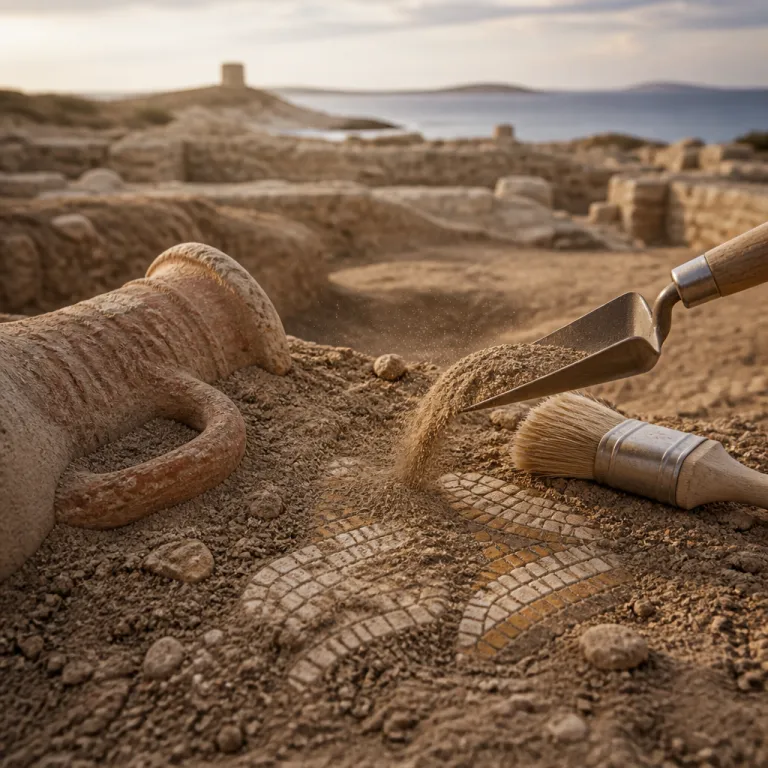
As you follow your guide through the archaeological site, mosaics appear underfoot, many protected by light roofing that softens the coastal glare. Some depict geometric patterns, others marine motifs that echo the sea just beyond the walls, reminding you that this city once lived from maritime trade. The proximity of the shoreline is striking ; parts of the archeological site are already submerged, and at high tide you will find waves washing over stones that once formed streets and warehouses.
Do not skip the small church Sant Efisio, which stands just outside the main entrance and anchors one of Sardinia’s most important religious processions. Both Saint Efisio and Sant Efisio are invoked here, a linguistic doubling that reflects how local devotion has layered itself over the older pagan city. Couples interested in wellness can then pivot from ruins to relaxation, pairing Nora with a spa afternoon at one of the premium resorts along this coast, where thermal style pools and thalassotherapy echo the ancient thermal baths in a contemporary key ; for business travelers used to urban comfort, the perspective in this overview of premium hotel amenities for demanding guests translates surprisingly well to Sardinia’s top coastal properties.
Designing a romantic day trip: from Cagliari to Pula and Chia
For couples staying in luxury hotels in Cagliari, Nora works best as the anchor of a curated day along the south coast. Leave the city after an unhurried breakfast, following the cagliari pula road past the salt pans and Poetto’s long beach, then continue toward the town of Pula where cafés and gelaterie line the small piazza. From here Capo Pula and the nora archaeological site sardinia are only a short drive, and you will find parking near the entrance to the archaeological park.
Plan your guided tour for early morning, when the light is soft and the wind off the sea still cool. The terrain inside the archaeological site is uneven, so wear comfortable shoes and bring water, as on site facilities are limited and queues can form at peak visiting times. Some areas may be closed due to ongoing excavations or preservation work, yet the main roman theater, thermal baths, and residential quarters of the ancient city remain accessible and well interpreted.
After your visit, walk down to the adjacent beach below the site nora, where the sea is usually calm and the view back toward the ruins is quietly dramatic. If you want to extend the day, continue south beyond Pula toward Chia, where Su Giudeu and Cala Cipolla offer some of city sardinia’s most celebrated sands and transparent water. This coastline also hosts high end resorts near Forte Village, making it easy to pair archaeology with a late lunch, a spa treatment, or sunset drinks before returning to Cagliari’s restaurants and rooftop bars.
Where to stay in Cagliari for effortless access to Nora
Choosing the right hotel in Cagliari shapes how easily you can fold Nora into your stay. Properties around the marina and Via Roma offer quick access to the main road toward Pula, while those in the Castello quarter trade proximity for elevated views over the city and sea. Either way, a concierge used to arranging private transfers will turn the nora archaeological site sardinia into a seamless half day outing rather than a logistical puzzle.
Couples who prefer privacy might opt for a suite in a restored palazzo, where thick stone walls keep rooms cool and breakfast is served in shaded courtyards. From these addresses the drive to the ancient city rarely exceeds an hour, and drivers familiar with cagliari pula traffic patterns can time your departure to avoid congestion. If you are arriving from the United States, the new air link described in this report on direct flights from New York to Sardinia makes it easier to land in Cagliari, check into a premium hotel, and plan Nora as your first gentle encounter with the island’s archaeological depth.
When evaluating properties, look for concierges who can secure an English speaking guide, arrange entrance tickets to the archaeological park, and suggest lunch reservations in Pula’s better trattorie. A well briefed driver will know where you can be dropped closest to the archeological site entrance, minimizing walking in the heat before your guided tour begins. This level of service aligns with the expectations of travelers who value both comfort and context, turning a visit to the ancient city into a polished experience that still respects the raw beauty of the sea and stones at Capo Pula.
Practical guidance: tickets, timing, and making the most of your visit
Before you leave Cagliari, ask your hotel to check current opening hours and ticket options for the nora archaeological site sardinia. There is an entrance fee for the archaeological site, and guided tours in English are usually available at set times, which your concierge or driver can coordinate around your schedule. Visiting early in the day is wise, as the sun on the exposed stones of the ancient city becomes intense by midday and shade is limited.
Once inside the archaeological park, follow the marked paths and respect any cordoned off areas, as excavations continue and some structures remain fragile. You will find interpretive panels that explain how the Phoenicians founded the city, how the Carthaginians managed it as a punic hub, and how the conquered Romans reshaped Nora into a roman administrative center with thermal baths, temples, and a structured street grid. Maritime trade, cultural assimilation, and military strategy all intersected here, turning this corner of city sardinia into a cosmopolitan outpost long before Cagliari’s current role as regional capital.
Allow at least ninety minutes for a guided tour, then extra time to wander, photograph the roman theater against the sea, and pause near the church Sant Efisio where both Saint Efisio and Sant Efisio are honored each spring. Wear comfortable shoes for uneven terrain, visit early to avoid crowds, and bring water ; limited facilities on-site. With this balance of planning and spontaneity, couples staying in Cagliari’s luxury hotels will find that a visit to Nora adds historical depth and a quietly dramatic seascape to an otherwise urban Sardinian escape.
FAQ
What is the significance of Nora for visitors staying in Cagliari?
Nora is considered the oldest city in Sardinia, and for travelers based in Cagliari it offers a rare chance to see phoenician, punic, and roman layers in a single coastal archaeological site. The combination of ruins, sea views, and proximity to Pula and Chia makes it an ideal half day or full day excursion. Its scale is manageable, yet the history is rich enough to satisfy travelers who value context and narrative.
How long should a couple plan for a visit to the Nora archaeological site?
Most couples should allow at least ninety minutes inside the archaeological park, plus driving time from Cagliari and a pause at the adjacent beach. If you add a guided tour, photography, and a relaxed coffee or lunch stop in Pula, Nora becomes a comfortable half day excursion. Those continuing to the beaches of Chia or a spa at a coastal resort can easily turn it into a full day.
Can visitors access all areas of the archaeological site at Nora?
Not every part of the ancient city is accessible, because excavations and preservation work are ongoing. Key areas such as the roman theater, thermal baths, forum, and several residential quarters are usually open and well signposted. Some sections near the sea or under active research may be restricted, and local staff will indicate which paths are currently available.
Is there an entrance fee and are guided tours available?
There is a paid entrance to the nora archaeological site sardinia, with a nominal fee that supports maintenance and research. Guided tours are typically available in multiple languages, including English, at scheduled times throughout the day. Many luxury hotels in Cagliari can pre arrange tickets and a guide, ensuring you arrive for a specific slot without waiting at the ticket office.
What should couples wear and bring when visiting Nora?
The terrain at Nora is uneven and exposed, so comfortable walking shoes, a hat, and sunscreen are essential. Water is important because on site facilities are limited and the sun can be strong, especially in the middle of the day. Light clothing, a small day bag, and a swimsuit if you plan to use the nearby beach will make the visit more enjoyable.